
United Kingdom, 2019
Directed by Mark Jenkin
With Edward Rowe (Martin Ward), Giles King (Steven Ward), Isaac Woodvine (Neil Ward), Mary Woodvine (Sandra Leigh), Simon Shepherd (Tim Leigh), Jowan Jacobs (Hugh Leigh), Georgia Ellery (Katie Leigh)
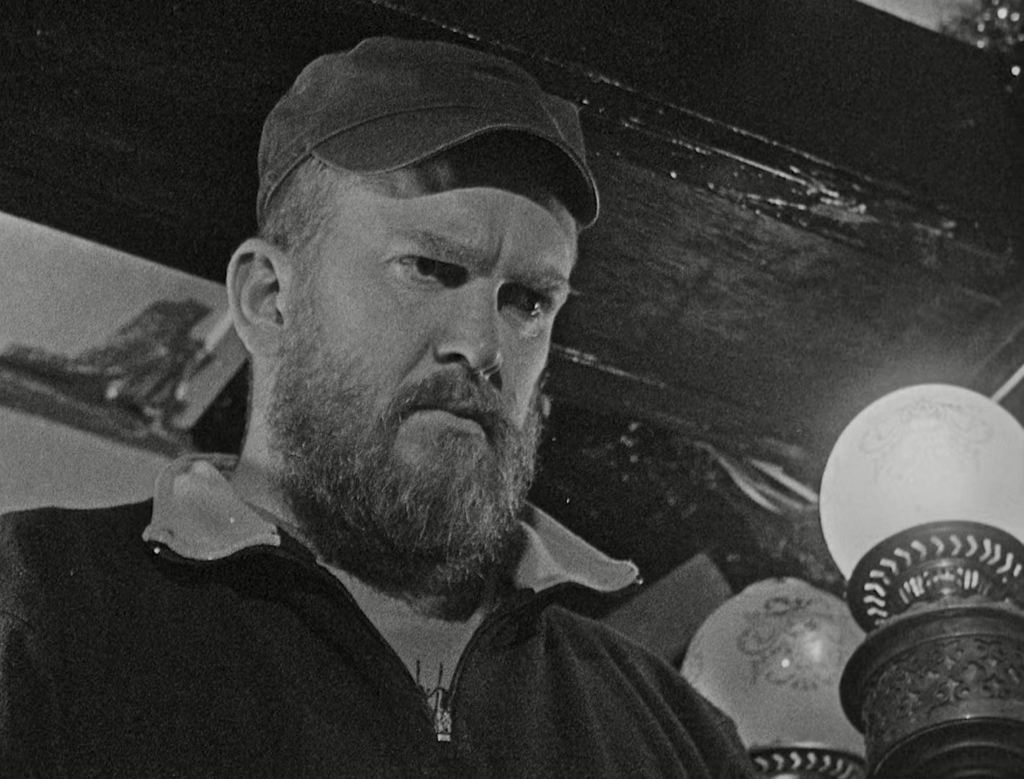
The faces are boxed inside the old-fashioned and tight 1.33:1 ratio, the intense feelings coursing under their features yielding the unsettling impression the frame is always about to burst. Shoes and hands also take the center stage, striking overblown elements filling the screen and drawing attention to their suspended throbbing force, gestures without motion pointing to moral, personal, social antagonism and rage.
It is not just the characters who have their bodies splintered and scattered in a baffling string of arresting closeups. Action also becomes a constant fragmentation. An elaborate editing intersperses pictures of odd events, unnerving presences, debris, epiphanies in the capture of otherwise straightforward developments. Juggling altogether different strands is a distinctive trait of a film deliberately considering past, present, and future as a hazy vortex, a twisted continuum, a baffling show of simultaneity, a real challenge to rationality.
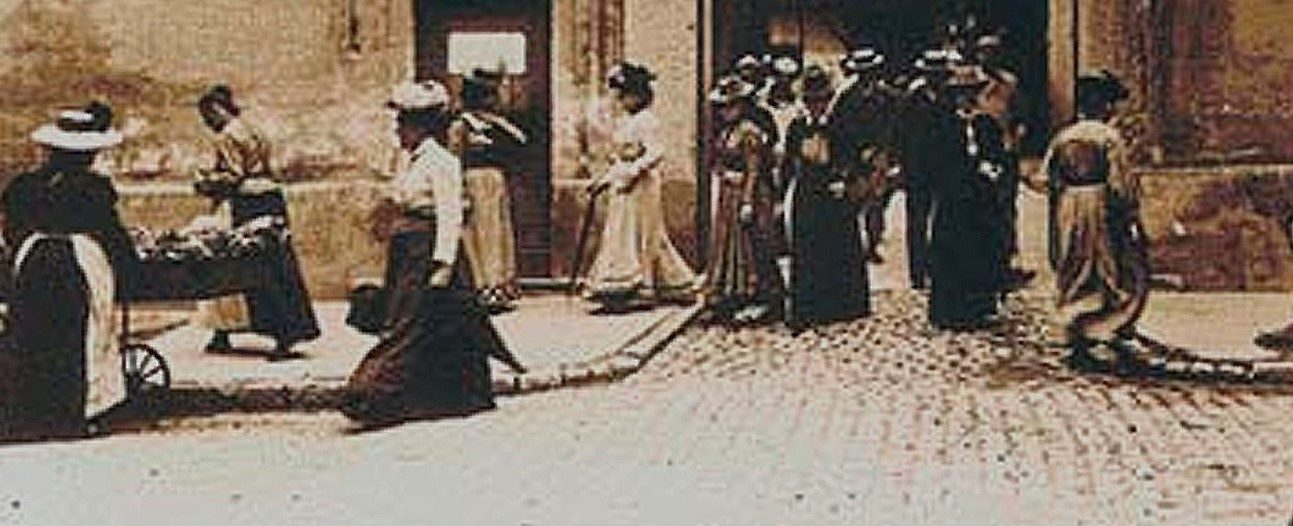
And there is that fascinating cinematography: a throwback to the time when black and white was the only option, a nod to what old films come to look after decades flew by, with those scratches, that flickering, that fading, those flaws making the old reels so unmistakably recognizable, and also the awkward reminiscence of home movies shot when no digital virtuosity was at hand but just the very low tech and very amateurish skill were all that was at hand. The feeling is inevitable: the film was shot with a 16mm Bolex camera (or more precisely a Paillard-Bolex H16), that Swiss invention first introduced for amateurs in 1935.
That kind of camera could not record at the same time images and sound. So using it means recording and adding separately, at a later stage. The constraint is amazingly turned into a creative opportunity delivering another challenge to the audience’s perceptive habits. The soundtrack ends up being as specific, exciting, and disorienting as the images. From the start an action, putting one’s foot on the ground, can produce a sound out of proportion, a deafening thump, the stifling of any other sound and the lack of a score only amplify. This becomes a motif in a film where carefully chosen words, though ordinary, swiftly get an eerie resonance and where both the wild and the village stand as fragile reality undermined by human tension and a pervasive, grating, sense of omen.
The narrative locus is already peculiar and uninviting: a small fishing village in the doldrums and clouded under a bleak weather somewhere in the Cornwall. All the technical and artistic choices made by director Mark Jenkin look a calculated and clever effort to befit such a place and such a story. This is about shooting a dreary place so far from the big modern city, so entrenched into the harshness of the wild and the human life, and where discontent and drama hover permanently fueling anxiety and mystery in the audience, that the ordinary, technologically advanced, tools and rules of filmmaking would have perhaps gloss over things and fail to convey the raw intensity and the rough edges defining the characters and their tragedy with enough force and singularity. There is also a degree of heartbreaking intimacy, of deep-seated resentment, of depressing decline, of merciless survival that Jenkin’s vision expresses fully, and it is not just a matter of artistic potency but also, somehow, of artistic poetry, an eerie and mournful kind.
It is soon clear that death plays a big part. The lead character first appearing so cross and intimidating, Martin Ward, is still seething about the sale of the family home in the wake of the father’s death. The old man would step into the frame, wisely commenting and advising, a benevolent and tranquil presence, with his hands tucked deep into a fisherman’s ample waterproof overalls – but it is only near the ending, in a poignant scene at the home he used to live in like his forefathers, that the film makes it plain the ghost that character was. And of course there is that vision of a bleeding young man’s head, a bewildering vision that proves to be the grim herald of the drama’s epilogue.
It is not only about particular human beings: it the death of a traditional way of living and thriving, about the decline of a community and a sense of identity and resilience. The Wards family home was sold to upper middle-class folks turning it into a guest house for tourists: Martin Ward’s brother Steven Ward was all too eager to cash the money and is pleased to contribute to this emerging tourist economy by making the family boat used to fish for so many years though the income tended to dwindle available to tourists wishing to ship around the serrated coast. Both moves have put the brothers at odds. It does not help that the stubborn and proud Martin Ward, who just cannot give up the job of fisherman, is held as a model by Steven Ward’s son, Neil Ward, and is assisted by the fierce young adult in his small-scale activity.
But the most bitter clashes pit the biting and brutal Martin Ward against the new owners, and boastful new entrepreneurs, confident Sandra Leigh and vain Tim Leigh. Both for the summer are accompanied by their children, the nice and feisty Katie Leigh and her grumpier and more conceited brother Hugh Leigh. It starts with a blunt remark on where Martin Ward parks his jalopy but the confrontation inevitably ratchets up and not just because of petty-minded squabbles about ownership and behaviors, or even the noise a boat can do early in the morning. Katie Leigh is attracted to Neil Ward, and the sentiment is requited. Meanwhile, Hugh Leigh looks a really pesky and haughty character Martin Ward loves to rag making the rather indolent and dumb fellow angrier.
And when Hugh Leigh realizes whom his sister is to keen to pay visits at any time of the day and the night, the stage is set for a bloody tragedy the attitudes of many of the adults only render unavoidable, with their obstinate and hostile attitudes – though, to be honest, Sandra Leigh is all too aware that limits should be set and that things should be kept in check, and if not, corrected. That spiraling down to a disaster is a stunning suspense, a crafty and gripping feat of rising tension on the silver screen and growing unease in the theater powerfully expressed by key aspects of the extraordinary artistry and technology at play, the other rationale for the director’s choice (think of the closeups on hands and shoes or the complex work on the sound).
But she would be on the losing side. The last images suggest Martin Ward’s seemingly unreachable dreams underpinned by a grief and an anger dangerously leading him on the brink – but he is not the character who is the more violent and causes death – are nevertheless those who prevail over the business fantasy of the Leighs, who, of course, cannot remain where they have shed blood. Perhaps it is indeed more an idealistic vision suiting the eerie and intriguing nature of the film than a realistic issue: the story explores grimly, with genuine details, how one type of economy seem doomed and ready to be displaced by other needs. Anyway, that triumph was made possible after dreadful events and another family loss: the price to pay has been quite hefty and the future of Steven Ward and Martin Ward hinges still on the vagaries of the fishing economy. At least, both have regained a sense of dignity and a real pride in their ancestry and their identity.