
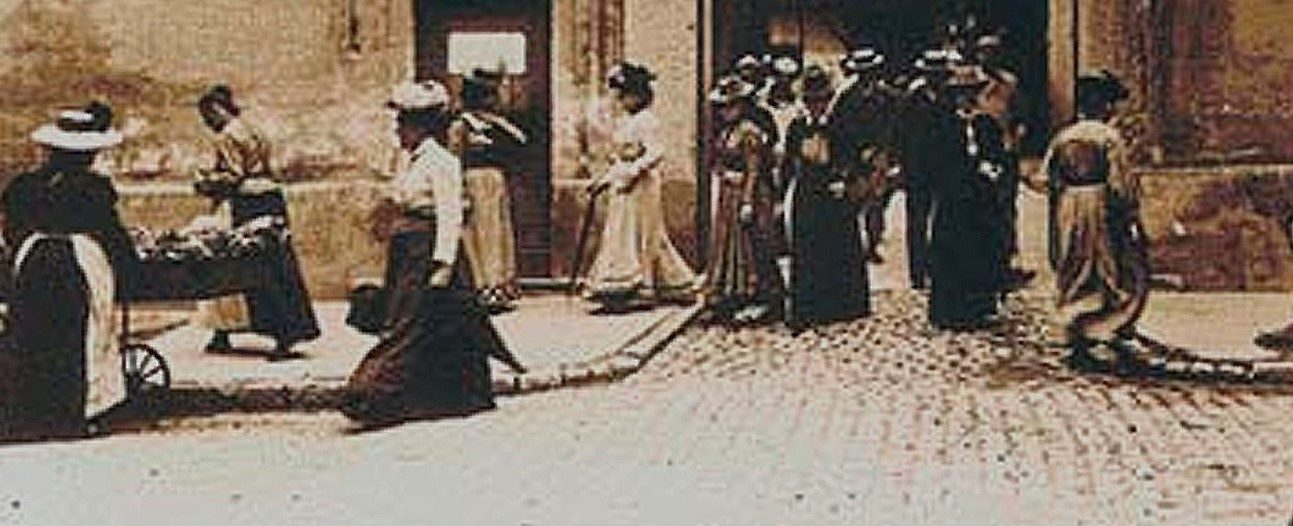
The Philippines, Portugal, Spain, France, Taiwan, 2025
Directed by Lav Diaz
With Gael García Bernal (Fernão de Magalhães), Ângela Azevado (Beatriz Barbosa de Magalhães), Amado Arjay Babon (Enrique), Ronnie Lazaro (Raja Humabon), Bong Cabrera (Raja Kulambo), Roger Alan Koza (Afonso de Albuquerque)
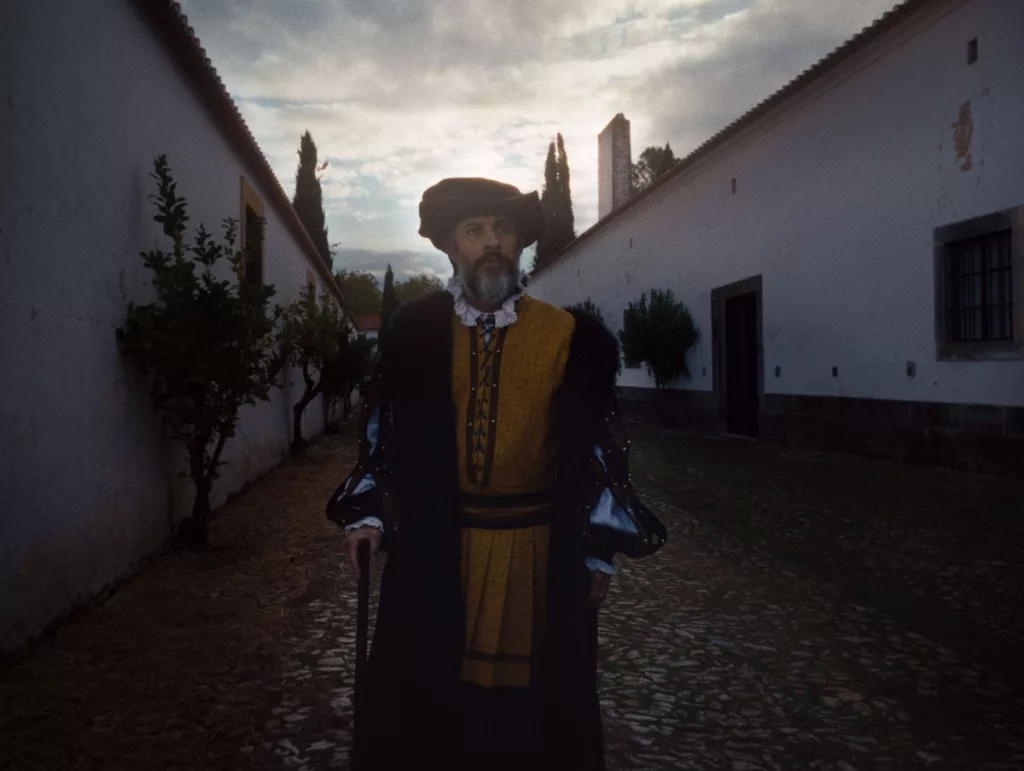
Director Lav Diaz has demonstrated since he began his filmmaking career in 1998 he is not afraid of taking a critical stance about his native country and its history to say the least. For what is his already 40th directing credit in film production he extends his precise fault-finding and fierce judgment to a milestone of the Western civilization, what has long been termed the Age of Discovery, with much admiration for the effort, and is now more honestly and bluntly named the exploration of the wider world by Europeans individuals and powers, and perhaps even more accurately the exploration and exploitation of the rest of the world.
Diaz has chosen the biopic format and picked up the Portuguese sailor whose caravels managed between 1519 and 1522 the first full circumnavigation of the Earth, and moreover from West to East, thanks to a long travel through the Pacific Ocean (which owns its name to the adventurer) after moving around the southern tip of South America (through a strait now bearing his name), with a fatal stay in the central area of the Philippines, around Cebu – Fernão de Magalhães would die there aged 41.
But in a first decisively critical, biting, choice, it is not with the textbook Magellan that Diaz opens his film but with a very ordinary indigenous woman of the Malacca area, carrying quietly through the jungle a pot suddenly freezing, stunned and frightened. What she saw and caused her frenzy would remain off-screen: the audience must rely on her words and the chain reaction the incident causes through her community. It seems a seer had predicted a white spirit would come one day and change the lives of her tribe. Folks are astonished beyond belief and excited beyond reason. But a cut jerks away the pictures of rites and ecstasy to show a jungle now littered with dead indigenous bodies while white men stride wielding their arms, eager to rescue their fellow warriors and ready to torture and kill. The reality of the discovery, the price of the exploration, the outcome of exploitation are just chaos and blood.
The leader of the conquering Portuguese sailors, Afonso de Albuquerque, is then shot teetering from too much alcohol and too much anger and despair: they are all dead, he stammers, referring to the troops he engaged to wrench Malacca from the control of Muslim merchants’ grip. Actually, they are still quite a few around, including the titular character, ready to hear one last speech from their chief who in plain terms emphasizes how important it is to force Islam to retreat, for the sake of the Christian faith, for the sake of the European merchants’ wealth, and for the sake of Portugal’s king. The point of all those sea travels and land fighting is clear – far more than the mind of Afonso de Albuquerque who collapses on the ground later, drunk as a fish, to the cynical amusement of his aides, including Fernão de Magalhães.
If Fernão de Magalhães comes across as a competent and successful soldier during these Malaysian scenes, trusted by his chief and acquiring a slave – a rowdy and feverish indigenous prisoner he christens Enrique and would remain his servant for years – the man who abruptly appears in a sunny but squalid street of Lisbon in 1531 cuts a different figure: crouched against a door, diminished, mocked. He is denied the help he needs, the king being the first to frustrate and offend a man who looks out of step in an increasingly wealthy and carefree kingdom (great scenes show an either baffled or impatient man attending a ball or chatting with pals). History tells us he has taken part in a battle in Morocco earlier, where he was badly injured and then that he chose to settle down in Spain: the film keeps those momentous moments away, sticking to an editing logic made of leaps and glossing over explanatory scenes. Next comes the encounter under the Spanish sun of a limping and wearied man with a young and charming woman keen on nursing him, a radiant presence (as her first shot delicately underlines as she addresses the haven in a garden). Beatriz Barbosa de Magalhães would become in 1517 his wife, the mother of a future child, and a haunting presence (literally, as she is shot as a ghost her husband clings to). She is swiftly left onshore, however, after Fernão de Magalhães succeeds in convincing the Spanish crown to back an expedition to Asia but from East to West this time, all around the globe.
Here comes the largest and most important section of the film, the famed sea journey securing a lasting and bright place in the textbooks to the adventurer. But if the editing features the expected tropes of such an expedition, starting with the expected and iconic images of the caravels bobbing on the oceanic waters, it wastes little time insisting on the travails and troubles the titular character meets. From crude pictures of sodomy to poignant pictures of starvation, how tough, challenging, upsetting the journey is gets powerfully demonstrated, with repeated mutinies from the Spanish members of the expedition as the dramatic core of that part of the feature. If previous scenes hinted at the relentless stubbornness of the adventurer and the ordinary callousness of the soldier, what takes place now shows how unsparing and unswerving Fernão de Magalhães is, obsessed with staying in charge and achieving his goals no matter what.
After harsh days in the Atlantic Ocean and excruciating ones in the Pacific Ocean, what is left of the original fleet reaches the Philippines. But once again, it is not what the Europeans do that the editing spotlights but how the indigenous behave – in this case a forbidding, muscular man standing firmly on the sand and surveying the horizon. No frenzy and no celebration: this time no clairvoyant has taught the tribe to wait for someone but those who land are not hunted down either. Curiosity prevails but competes with deep grief as illness sweeps the tribe, killing children. To Fernão de Magalhães, this proves an opportunity to prove the benefits of the Christian faith and European medicine. When the son of the tribe’s leader, Raja Humabon, gets cured it seems a breakthrough can be secured.
The film at this point underlines the missionary zeal of the sailors, bordering on fanaticism. Things inevitably get wrong: both the secular leader of the tribe and the spiritual one, sorcerer Raja Kulambo, start to dislike their visitors’ forceful religious proselytism and political assertiveness and devise a clever plot involving local mythology and tribal differences. They would carry the day: bookending the film, another massacre spoils the pristine wild landscapes, but this time it is the Whites who lose, with a ceremony around the beheaded dead body of Fernão de Magalhães. The coda, surprisingly, audaciously, erroneously probably, shows an Enrique now free, back into the jungle and its own traditions.
History teaches his expedition would still going on, achieving his goal of a circumnavigation, and that Cebu as well as many other parts of Asia would be tightly kept under the control of Western powers of various nationality and forms (governments, commercial ventures, and last but not least religious institutions) while the death of Fernão de Magalhães granted him an heroic status and was more a tragic development than a lasting defeat. However, exposing the sentiment of a victory stirring the tribe as a conclusion to this biopic is not illogical from their viewpoint and the director’s: relating what the indigenous populations experienced on the ground and right away and what is the other part of the complex story of the exploration that is not centered on the Europeans’ sources and discourses is Diaz’ concern all along.
His film is a constant effort to fight with any eulogizing approach to the adventurer, to built a wider visual and emotional narrative around his figure, cutting short through his personal life and reframing his adventures. If the runtime is as long and the editing as great as could be expected from such an ambitious period piece (however, Diaz shot even longer films, so this is a bit of a departure), the images avoid being as sweeping and swell as a big Western production would have it in a pointed move that looks like a nod to Werner Herzog’s famous take on that part of the human history, his 1972 masterpiece “Aguirre, der Zorn Gottes – Aguirre, the Wrath of God” – the 2025 film is shot in an old-fashioned Academy ratio that delivers purposefully a tightened space to characters and actions while some wide shots pointedly, like the Herzog film, show how nearly insignificant, humans are among the majestic wild, and also absurd, being white and clad in inconvenient clothes (but Diaz has always liked those kind startling wide shots).
Time, as it happens in a Diaz movie, looks rather like a dead time, where those inside the frames stagnate while those inside the theater can feel bored: this mythical sea journey and this towering figure are also made up of futile wanderings and frustrating situations, a pursuit that is not so exciting and deserving than constantly flirting with absurdity and landing eventually into disaster. Unlike Aguirre, this fictional Magellan is not a study of folly but on obstinacy; but his drive is cast as equally dangerous and blinding; it provokes his death, which could not have changed the course of history for the indigenous of course but on the other hand proves their resilience and simply their very existence and honor.